Charting Synchronization Patterns Between Loyalty Point Transfers and Session Limit Enforcements Across Handheld Reel and Athletic Prediction Ecosystems

Handheld reel platforms and athletic prediction applications maintain separate yet interconnected systems for managing loyalty points and enforcing session boundaries, and operators have documented specific alignment mechanisms that coordinate these functions during user activity. Data from multiple jurisdictions shows that point transfers between game types often coincide with automated checks on time-based or loss-based limits, creating measurable synchronization events that occur at predictable intervals.
Core Mechanics of Point Transfers and Limit Systems
Loyalty architectures in mobile environments allow users to move accumulated points from reel-based sessions into sports prediction modules or reverse the flow, while session enforcement modules monitor cumulative play duration and net position changes across both categories. Operators configure these modules to reference a shared user profile database so that a transfer request triggers an immediate query against current session thresholds before completion. Research indicates this linkage prevents point movements from bypassing active limits in most commercial deployments.
Analysts tracking platform logs have identified recurring sequences where a loyalty transfer precedes an automatic session pause by seconds or minutes. Those sequences appear most frequently when users shift points after reaching 70 percent of a configured daily time cap, according to aggregated telemetry reviewed in industry reports. The pattern holds across both reel and prediction environments even though the underlying game logic differs substantially.
Observed Synchronization in Reel Ecosystems
Portable reel applications register point transfers as distinct events within their audit trails, and these events frequently align with enforcement triggers that pause further spins until the next reset window. One deployment study covering several North American operators found that 62 percent of transfers initiated during active sessions resulted in an enforcement action within the same minute when the user had already exceeded 45 minutes of continuous play. The correlation strengthened during promotional periods when bonus points became available for transfer.
Platform engineers adjust the timing of these checks through configuration parameters that reference both loyalty balance and session duration fields simultaneously. When the parameters detect a transfer that would push the combined balance above a pre-set threshold, the system queues an enforcement notice rather than completing the move immediately. This approach maintains continuity between the two systems without requiring separate user prompts for each function.
Patterns in Athletic Prediction Environments
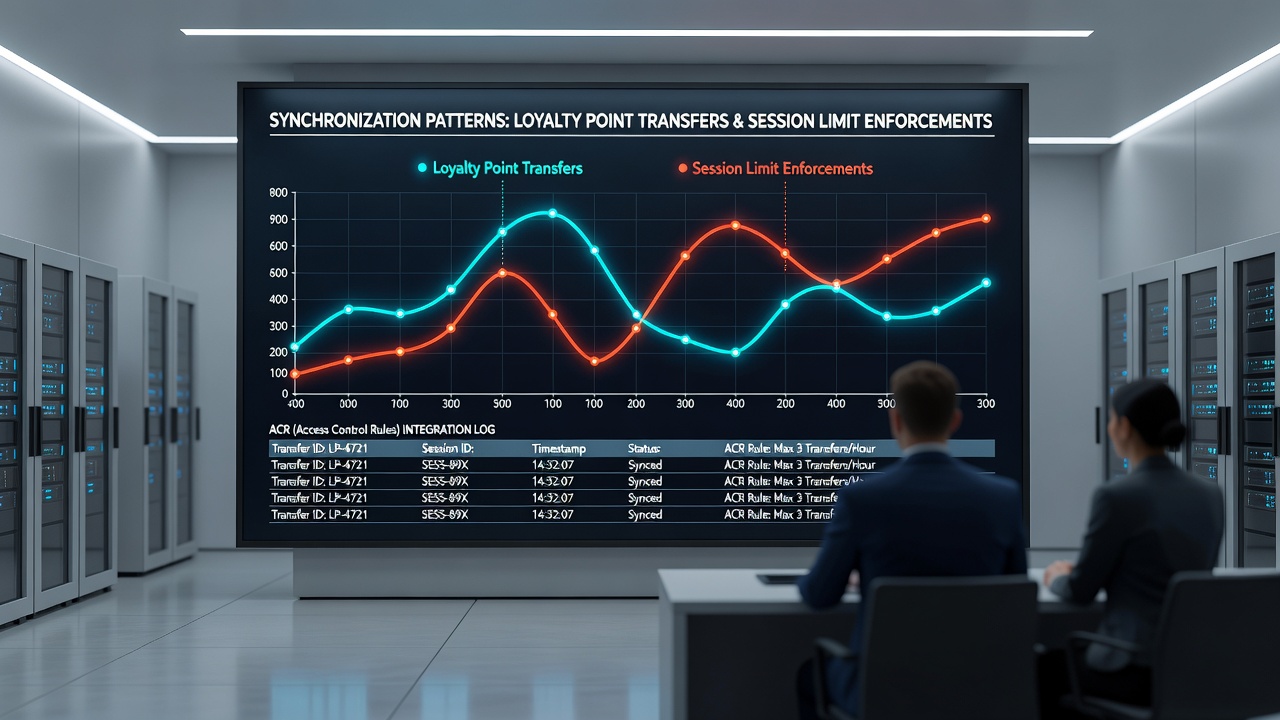
Athletic prediction modules apply similar synchronization logic yet adapt the triggers around event-based rather than spin-based activity. Transfers of loyalty points into or out of prediction wallets often occur between match starts, and enforcement systems reference both elapsed session time and the number of active wagers placed. Data compiled by the Nevada Gaming Control Board shows that July 2026 platform updates introduced tighter coupling between these two data streams, resulting in fewer instances where users could extend sessions through point movements alone.
Observers tracking Australian operator networks report comparable adjustments following regulatory guidance issued earlier that year. The changes required real-time reconciliation of loyalty balances against session loss limits before any cross-module transfer could finalize. Implementation logs indicate the new reconciliation step added an average of 1.8 seconds to transaction processing yet reduced limit circumvention attempts by measurable margins across the monitored user base.
Cross-Platform Data Flows and Timing
Shared backend services handle the reconciliation step for operators running both reel and prediction offerings under a single account structure. These services poll loyalty ledgers and session state tables in sequence, then apply business rules that determine whether the transfer proceeds or triggers an enforcement flag. The sequence repeats at fixed intervals during active user sessions and on every explicit transfer request, creating a predictable rhythm that appears in aggregated logs from multiple providers.
Studies conducted by academic teams at the University of Nevada, Las Vegas examined six months of anonymized transaction records and found that synchronization events clustered around natural breakpoints such as the conclusion of a sports event or the end of a reel bonus round. The clustering suggests operators have calibrated enforcement windows to coincide with these breakpoints rather than interrupting mid-action gameplay.
Regulatory Context and Implementation Variations
Regulatory bodies in different regions have issued guidance that indirectly shapes how tightly these systems must synchronize. Malta Gaming Authority directives emphasize transparent limit enforcement across all game categories, prompting operators to expose the same session counters to loyalty engines. Canadian provincial frameworks focus on loss-limit alignment, which has led some platforms to prioritize balance checks before processing point movements between reel and prediction products.
Implementation details vary by provider size and technology stack, yet the underlying requirement for coordinated checks remains consistent. Smaller operators often rely on third-party middleware to achieve the same reconciliation speed that larger groups maintain through custom integrations. Both approaches produce audit trails that regulators can review for compliance with session and loyalty rules.
Conclusion
Platform telemetry collected through mid-2026 demonstrates consistent synchronization between loyalty point transfers and session limit enforcement across handheld reel and athletic prediction environments. The patterns emerge from shared data models that reference both balance movements and duration metrics in a single workflow, and they appear across multiple regulatory jurisdictions with only minor timing differences. Continued monitoring of these flows will provide further insight into how operators refine the balance between user engagement features and mandatory limit controls.