Tracing Encryption Standards and Withdrawal Timelines Across App-Based Poker Networks and Live Dealer Interfaces
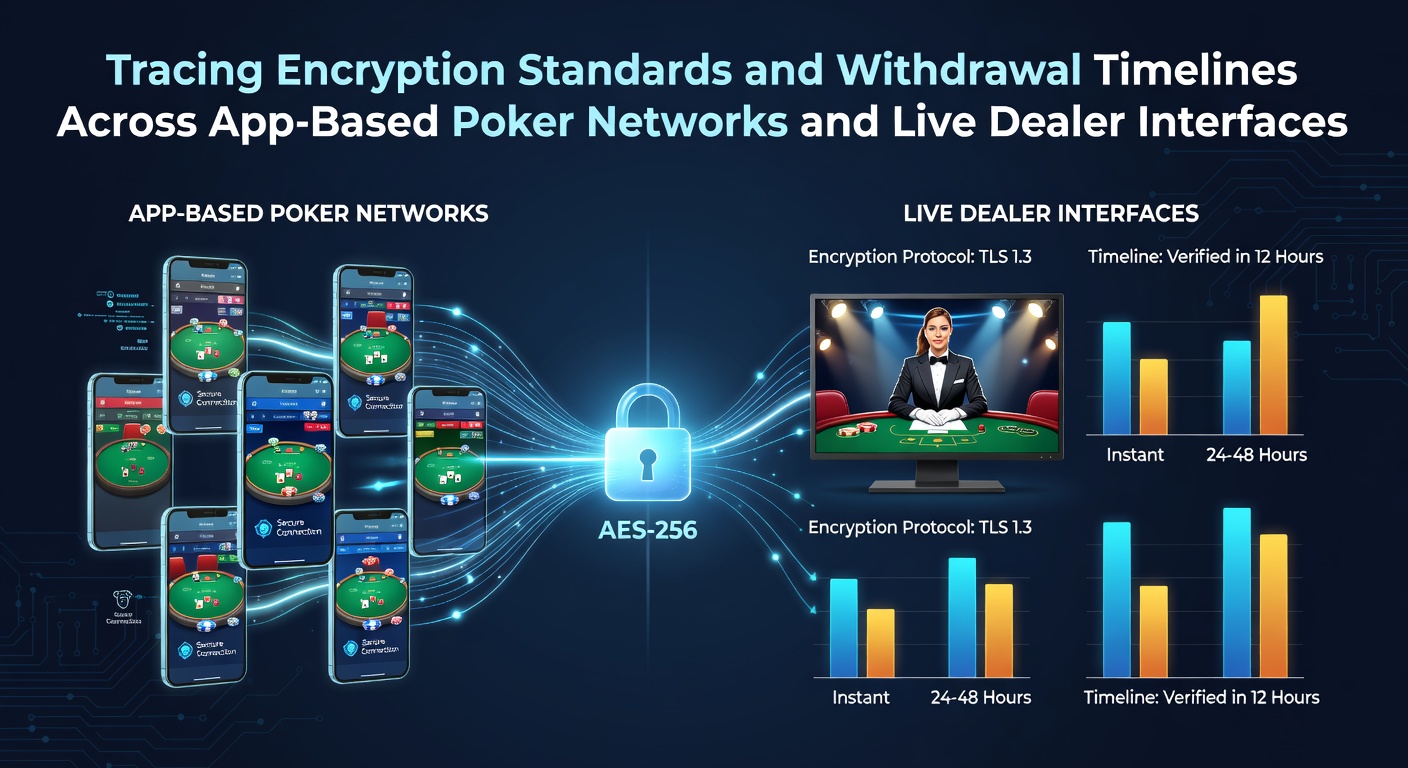
App-based poker networks and live dealer interfaces rely on layered encryption protocols that protect player data during transmission and storage, while withdrawal processes follow defined timelines shaped by payment methods and compliance requirements. These systems integrate standards such as TLS 1.3 and AES-256, and operators coordinate with regulatory frameworks across multiple jurisdictions to maintain consistency.
Encryption Protocols in Mobile Poker Applications
Developers implement end-to-end encryption that secures card shuffles, player actions, and account details within poker apps, and research from the National Institute of Standards and Technology outlines how AES-256 remains the baseline for symmetric encryption in gaming environments. Network operators update their systems to support TLS 1.3 handshakes that reduce latency while preserving forward secrecy, and data from the Alcohol and Gaming Commission of Ontario shows that Canadian-regulated platforms adopted these protocols ahead of broader North American rollouts.
Live dealer interfaces add another layer because video streams and real-time bets travel alongside encrypted metadata, whereas poker networks focus encryption on randomized number generation and session tokens. Observers note that both formats converge on certificate pinning to block man-in-the-middle attempts, and industry reports indicate that major providers completed TLS 1.3 migrations by early 2025.
Regional Regulatory Influences on Security Standards
European operators align with directives from the Malta Gaming Authority that require documented encryption audits every twelve months, and Australian state regulators impose similar documentation through the New South Wales Independent Liquor and Gaming Authority. These overlapping rules create a de facto global baseline, and figures released by the European Gaming and Betting Association reveal that 87 percent of surveyed platforms now publish their cipher suites publicly.
App stores enforce additional checks, and Google Play security reviews verify that poker and live dealer titles meet minimum TLS versions before listing. Compliance teams track emerging quantum-resistant algorithms, although full deployment remains scheduled for later in the decade.
Withdrawal Timelines Across Payment Channels
Withdrawal processing times differ by method and operator policy, with e-wallet transfers often completing within four to twenty-four hours while bank wire requests extend to three to five business days. App-based poker networks typically route funds through the same processors used by live dealer platforms, which creates shared bottlenecks during peak volume periods. Data compiled by the New Jersey Division of Gaming Enforcement indicates that average approval windows shortened by 18 percent between 2023 and 2025 after automated verification tools expanded.
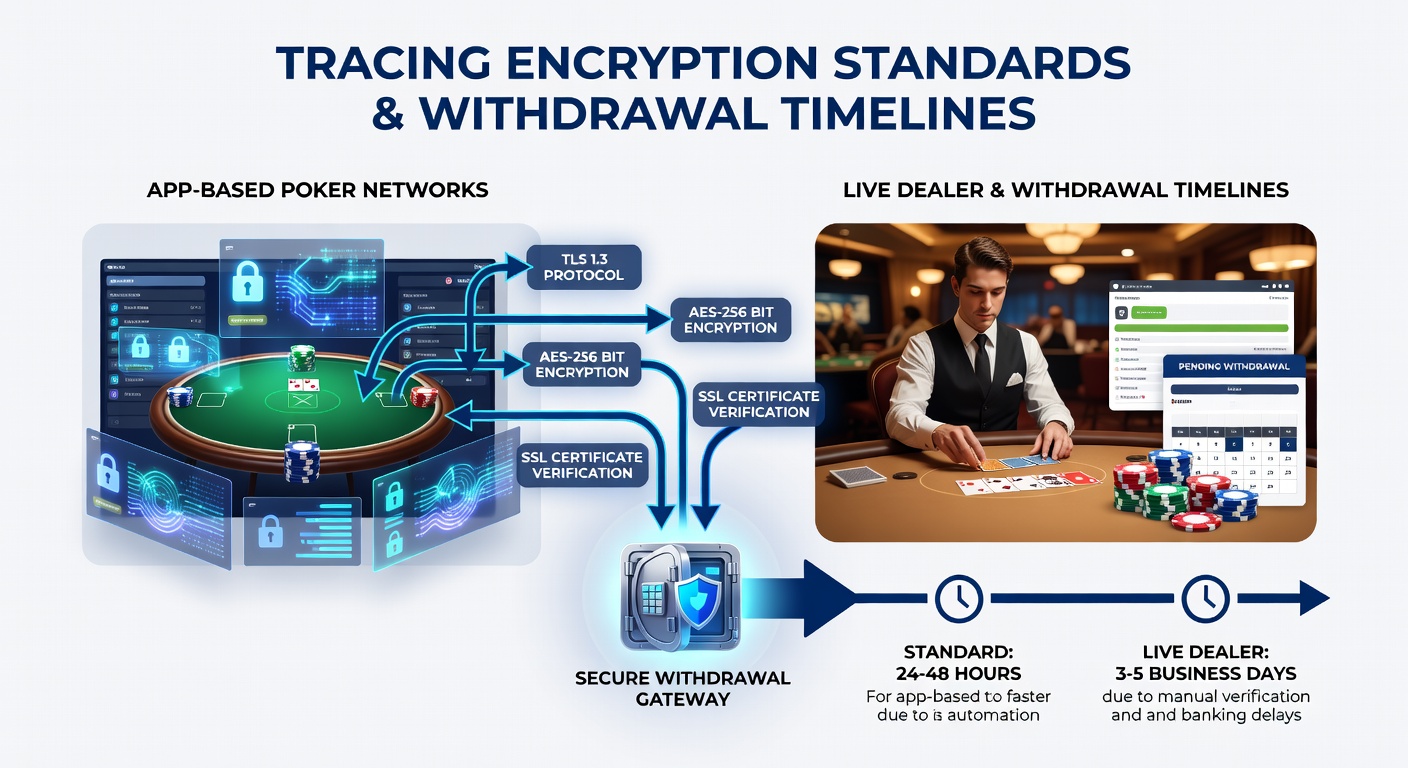
Cryptocurrency withdrawals follow separate schedules because blockchain confirmations add variable delays, and many networks now list expected ranges alongside each coin option. Operators publish these timelines in their terms, and users receive automated status updates once requests clear internal review. In May 2026 several platforms plan to introduce instant verification for returning players who maintain verified status, which should further compress processing windows without altering underlying encryption layers.
Interplay Between Security Audits and Payout Reliability
Third-party auditors examine both encryption implementations and payout logs during the same review cycles, and findings from these assessments often appear in aggregated industry summaries. When encryption upgrades occur, withdrawal systems undergo parallel testing to confirm that new certificate chains do not interrupt transaction flows. Regulators in multiple regions require operators to maintain segregated player funds, and this separation adds an extra verification step that lengthens some timelines but strengthens overall security posture.
Case examples include networks that reduced average withdrawal times after migrating to unified payment gateways while preserving AES-256 encryption for all financial records. Those who've monitored these transitions report that user complaints about delays dropped measurably once verification automation increased.
Future Developments and Standardization Efforts
Industry working groups continue to evaluate post-quantum cryptography options for long-term data protection, and academic papers from institutions such as the University of Nevada, Las Vegas, model potential impacts on real-time gaming latency. Withdrawal timelines may shorten further if instant settlement rails gain regulatory approval in additional markets, yet encryption overhead remains a fixed component that operators cannot eliminate.
Coordinated updates scheduled for 2026 aim to align certificate lifecycles across poker and live dealer ecosystems, reducing the administrative burden of maintaining separate compliance records. These changes build on existing frameworks without disrupting current player experiences.
Conclusion
Encryption standards and withdrawal timelines in app-based poker networks and live dealer interfaces continue to evolve through regulatory coordination and technical upgrades, and the interplay between security requirements and processing speed shapes operational decisions across jurisdictions. Tracking these elements provides a clear view of how platforms maintain data protection while delivering funds according to published schedules.